
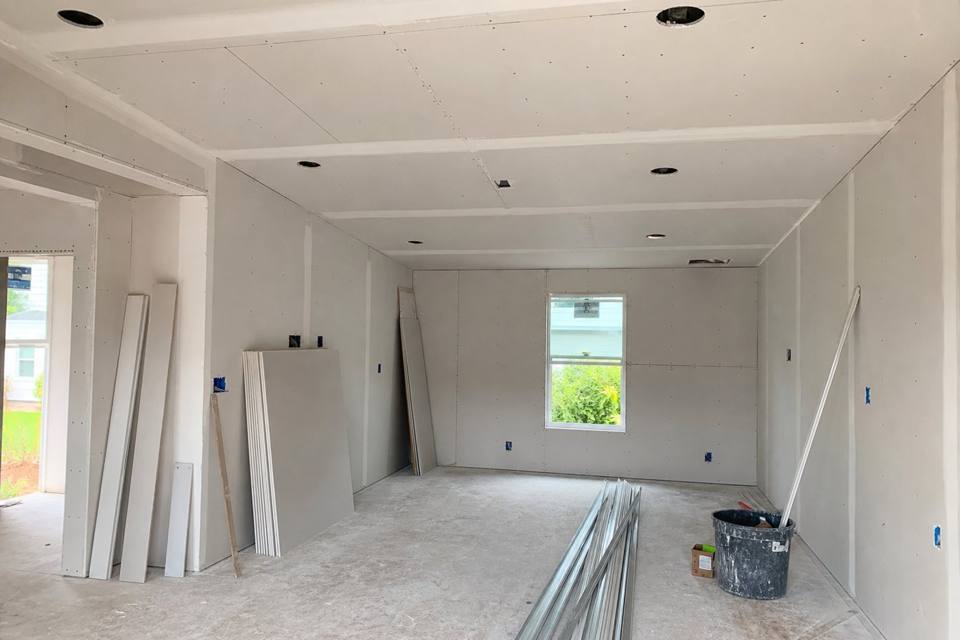
Drywall installation
New drywall should hang flat, break cleanly on framing, leave neat openings around doors and windows, and give the finisher a solid surface to tape, mud, sand, and prime.
Residential & commercial drywall · Orlando, FL
Clean drywall work starts before paint. Orlando Drywall Experts focuses on straight board installation, tight seams, smooth finishing, careful texture matching, ceiling drywall, and practical repair work that leaves the room looking finished instead of patched.
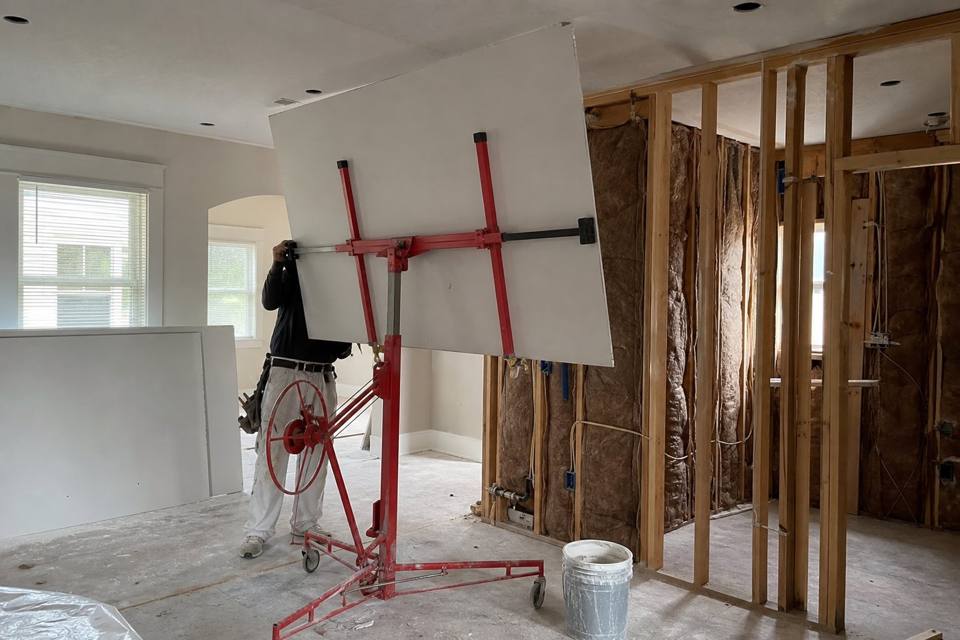
What the service includes
Drywall service can include hanging new board, repairing damaged wall or ceiling sections, finishing seams, blending texture, preparing surfaces for paint, and helping decide whether a patch, larger cut-out, or new installation makes sense for the room.
In Orlando, many projects involve remodel openings, ceiling stains, garage conversions, rental turnovers, commercial suite changes, and texture blending in bright rooms. You do not need to diagnose the issue first; a call or form request can start with what you are seeing and where it is happening.
New drywall should hang flat, break cleanly on framing, leave neat openings around doors and windows, and give the finisher a solid surface to tape, mud, sand, and prime.
Sheetrock hanging is where straight walls begin. Panel layout, screw spacing, butt joints, inside corners, outside corners, and ceiling transitions all affect how clean the finished room looks.
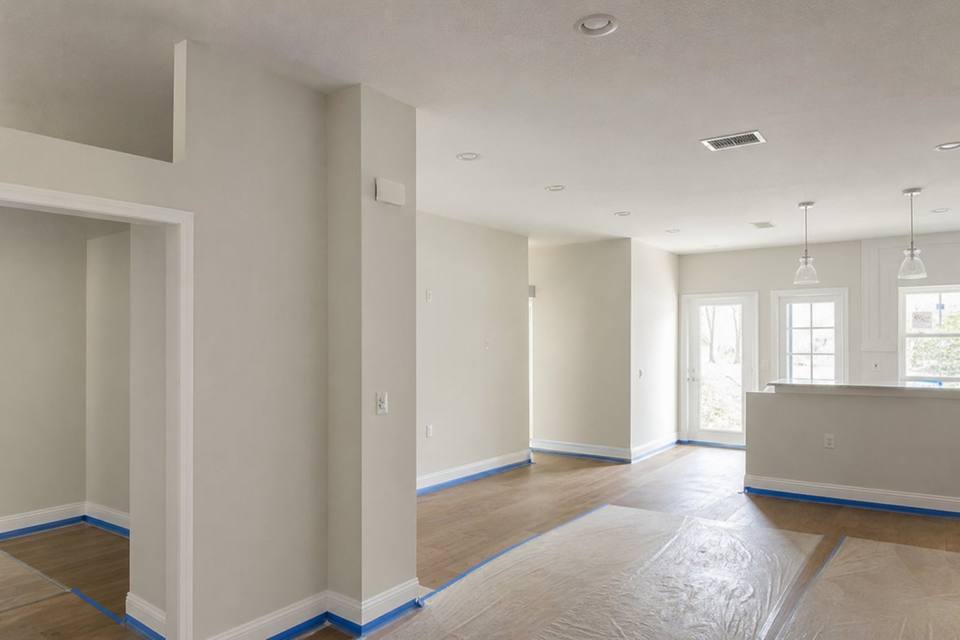
Finishing turns raw board into a paint-ready surface. Tape, mud, corner bead, sanding, and touch-up work should leave seams quiet after primer and paint.
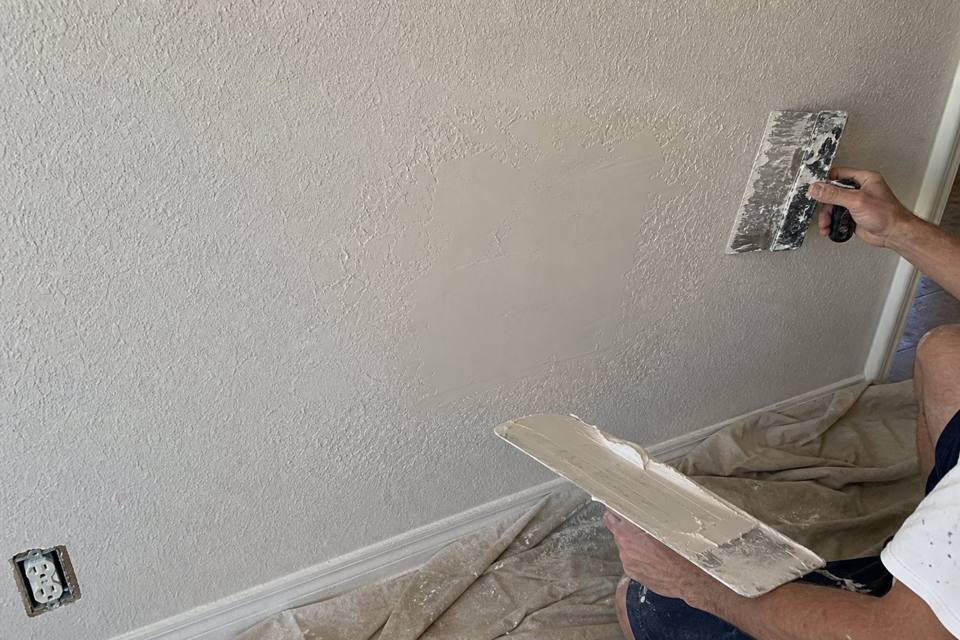
Texture work should blend into the room instead of advertising the patch. Orange peel, knockdown, smooth finish, and skip trowel each need a different hand.
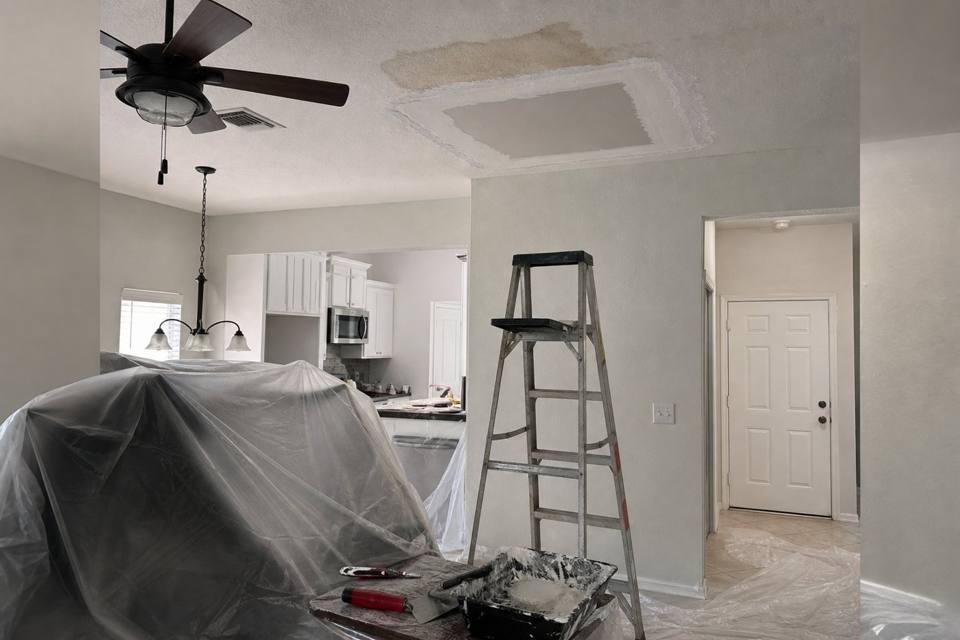
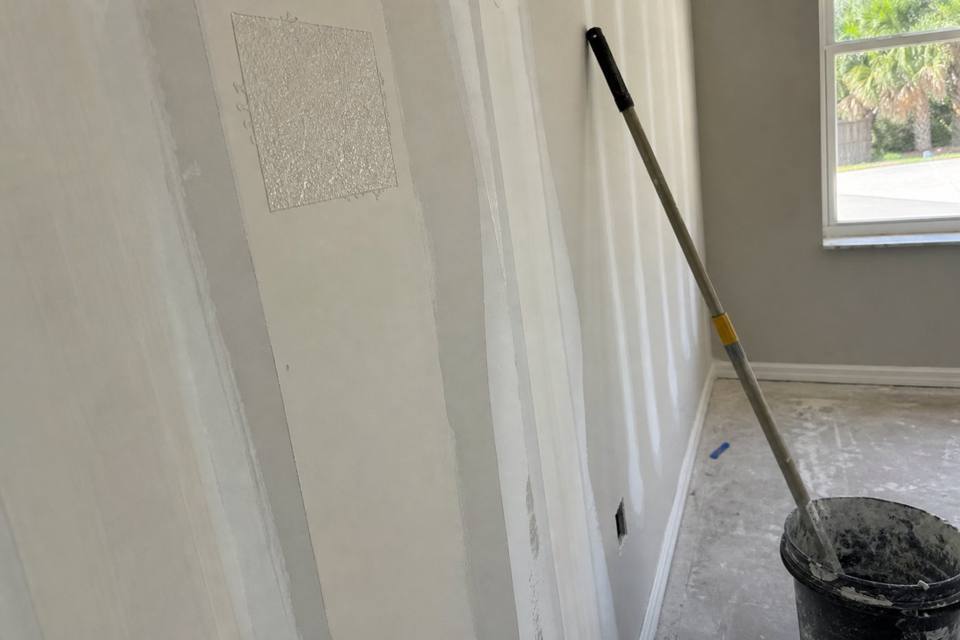
Ceiling drywall should be fastened, taped, sanded, and blended carefully where it meets walls, soffits, lights, fans, and vents. This image shows a repair area before sanding, texture, and paint.
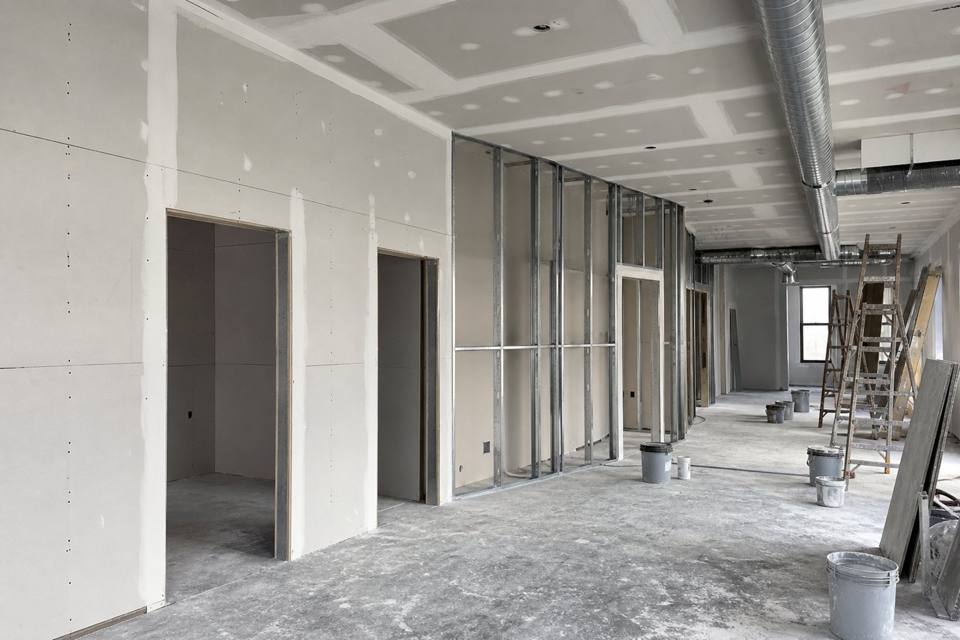
Commercial drywall work needs durable corners, clean partitions, reliable finish quality, and practical scheduling for offices, retail suites, rentals, and tenant improvements.
When to reach out
Cracks, dents, holes, nail pops, stained ceiling areas, and soft or swollen board are good reasons to ask for drywall help before paint makes the problem more noticeable.
Room additions, garage conversions, opened walls, and commercial suite changes may need hanging, taping, corner bead, sanding, texture, and paint-ready finish planning.
Raised mud, hard patch edges, mismatched knockdown or orange peel, and visible seams can keep a wall from looking finished after paint.
You can call or send the form with a plain description of what you see. You do not need to identify the board type, finish level, or repair method first.
Why the problem happens
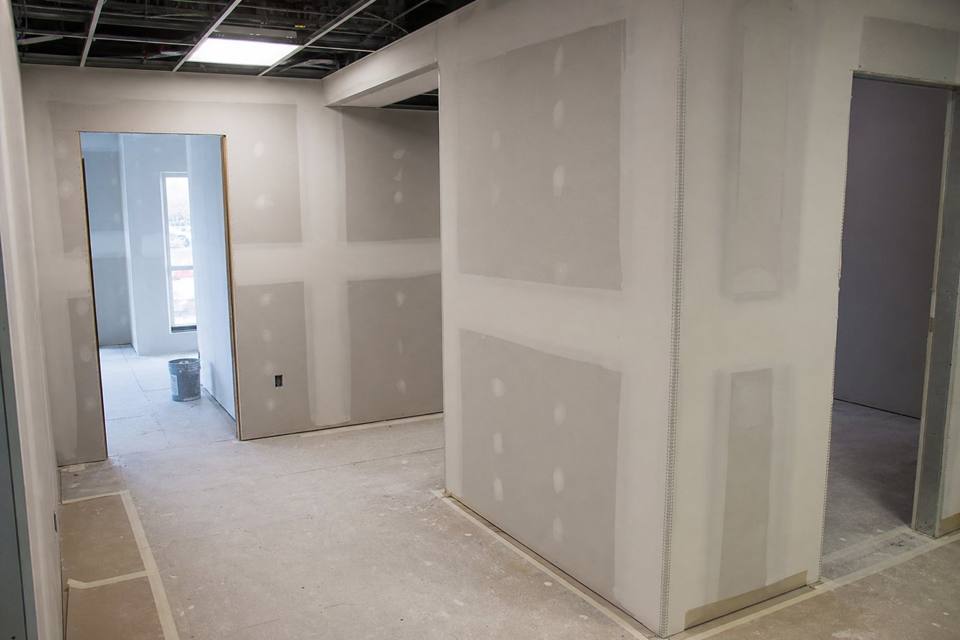
Uneven framing, crowded openings, ceiling transitions, and small offcuts can create seams in the wrong places. Better layout produces cleaner walls.
Strong side light, large windows, dark paint, and smooth walls can reveal seams that would be hidden on a textured wall.
Texture should match the surrounding surface before paint starts. Sanding dust, raised edges, and heavy spray texture can all show through later.
Common wall and ceiling issues
Stains may need damaged board removed, insulation checked, texture blended, and the source corrected before the ceiling is closed and painted.
Fastener movement and seam ridges can return if the area is only skimmed lightly. The repair should address attachment and finish so the same spot does not return.
Hard patch lines, raised mud, and poorly blended texture make a repair obvious. Better feathering and texture control help the wall disappear after paint.
Soft gypsum, stained paper, swelling, and recurring moisture need work before new compound or paint goes over the area.
Cost and scope factors
Orlando Drywall Experts serves Orlando, Winter Park, Lake Nona, Conway, Dr. Phillips, Apopka, Maitland, and nearby Orange County areas. Homes, condos, offices, retail spaces, garages, additions, and remodel projects each need drywall work that fits the property and the finish expectation.
Drywall cost and scope usually depend on room type, ceiling height, board count, finish level, texture, access, moisture damage, and whether the work is new installation, finishing, or repair.
Repair or replacement choices
New walls need layout, hanging, taping, finish level selection, and texture or smooth-wall planning before paint.
Commercial interiors may involve partitions, corner protection, ceiling tie-ins, and durable finish work around customer-facing spaces.
A patched area may need feathering, sanding, primer planning, and a more careful texture blend to avoid looking like a repair.
Drywall FAQs
No. Call or fill out the form with a plain description such as a ceiling stain, cracked seam, texture mismatch, room addition, damaged wall, or commercial suite change. A follow-up call can sort out the room details, finish level, access, and next step.
Many Orlando homes mix knockdown, orange peel, older hand texture, and prior patch work. Humidity, bright window light, and repainted rooms can make a small patch stand out. A useful repair plan looks at the surrounding wall or ceiling, feathering area, primer needs, and whether the texture should be blended wider than the damaged spot.
Sometimes, but soft gypsum, sagging board, swollen paper, or recurring moisture usually need more than surface compound. The water source should be addressed first, then the damaged area can be cut back, fastened, finished, textured, and prepared for paint so the stain does not simply bleed through again.
Board count, ceiling height, access, framing condition, number of corners, finish level, texture choice, moisture-resistant material needs, and cleanup expectations all affect scope. A small patch, a garage conversion, and a commercial suite finish-out can all be drywall jobs, but the labor and finish requirements are very different.
Smooth walls can look cleaner but reveal seams, sanding marks, and framing waves under side light. Knockdown or orange-peel texture can hide minor irregularities and match nearby rooms. The right choice depends on lighting, paint color, existing surfaces, and how much of the room is being refinished.
Replacement may make more sense when board is soft, mold-prone moisture damage is suspected, cracks keep returning, patches overlap, or the surface has too many old repairs to blend cleanly. A follow-up can help decide whether a focused patch, larger cutout, skim/finish work, or new board is the practical next step.
Call or send the form with a simple description of the wall, ceiling, or room. The follow-up can sort out the practical scope, finish expectations, access, and next step before scheduling or pricing is confirmed.
Talk Through Drywall Scope