Ceiling stains
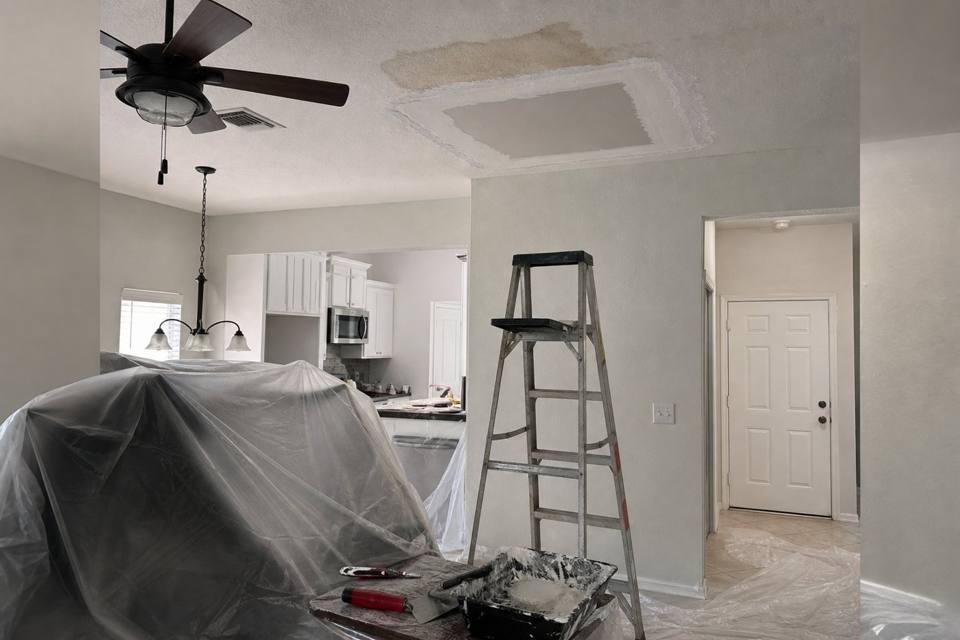
The water source should be corrected before closing the ceiling, blocking stains, and blending texture.
Wall, ceiling and patch repair
Drywall repair should solve the visible damage without leaving a patch that draws the eye after paint. The right scope depends on whether the board is soft, the crack is active, texture can be matched, paint will blend, and the underlying leak or movement has been corrected.
Repair diagnosis
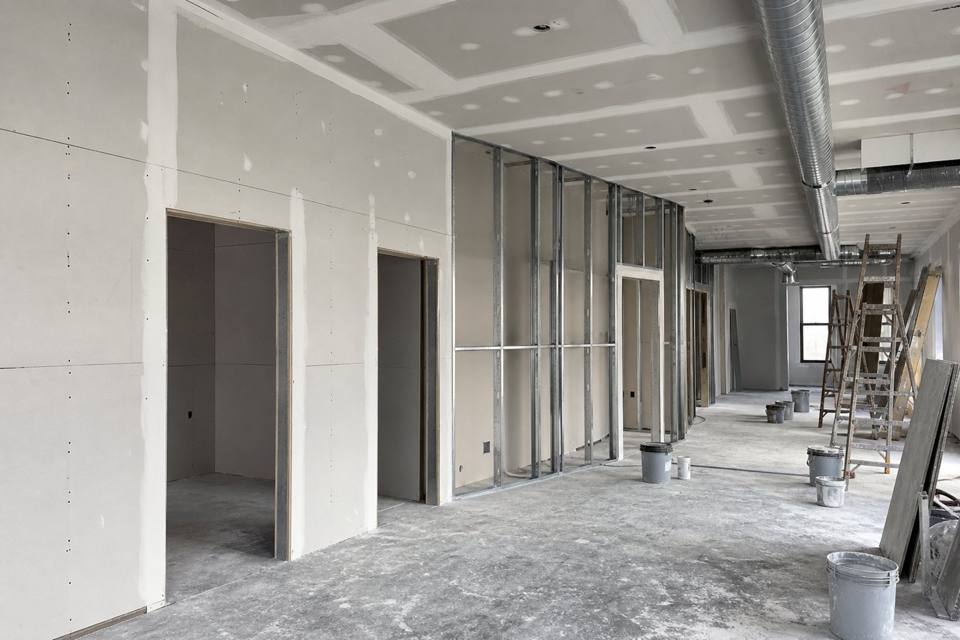
Many Orlando drywall calls start with a visible symptom: a ceiling stain, a cracked seam, a dented garage wall, failed tape, a nail pop, or a rough patch from prior work. The visible spot matters, but the cause matters more. If moisture, movement, or impact damage is still active, fresh compound can fail again.
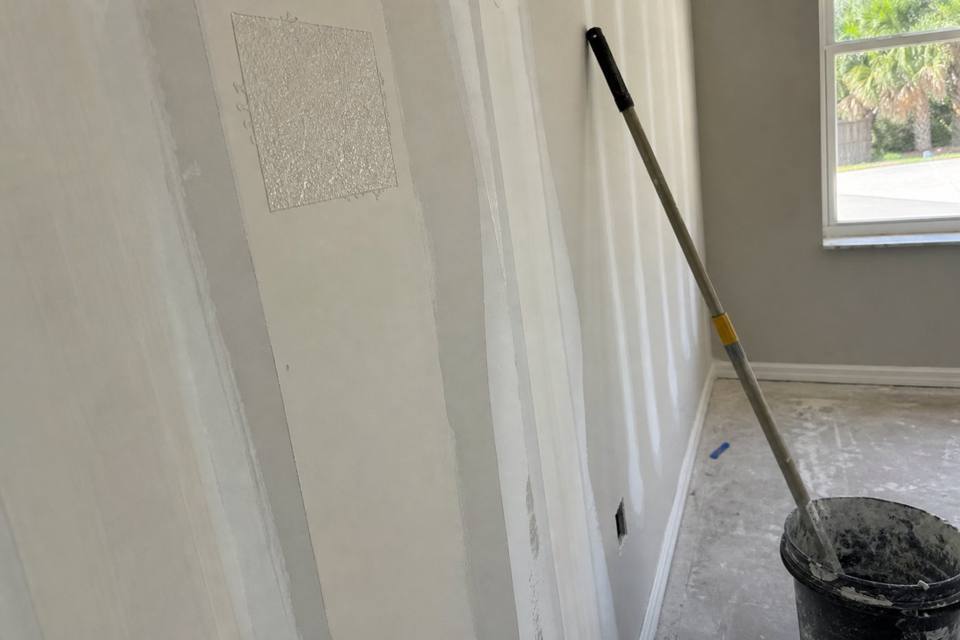
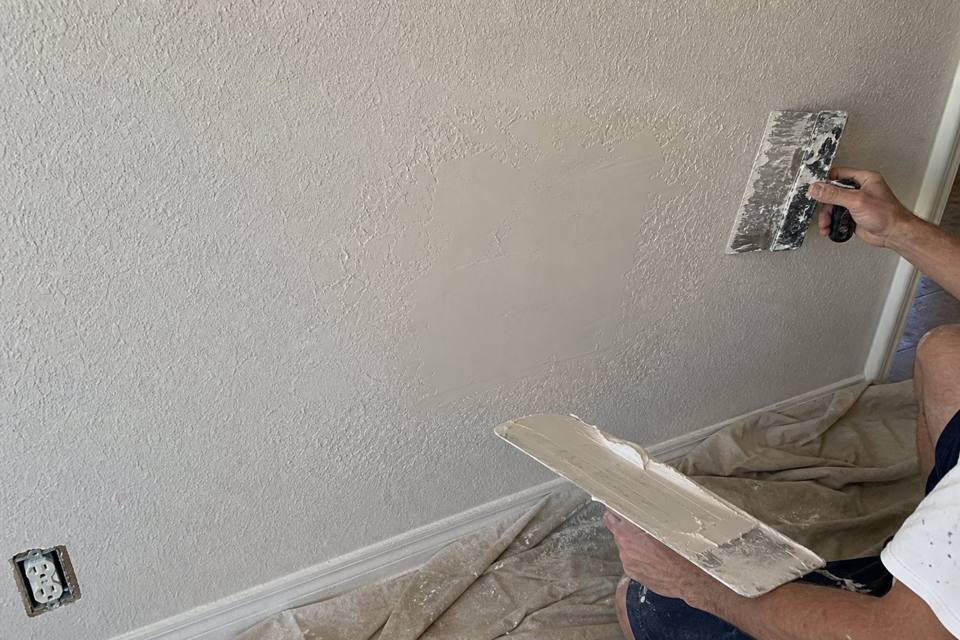
The repair plan should consider board replacement, backing, tape, compound type, sanding, texture match, primer, and paint transition. Small repairs still need enough feathering to avoid a raised square or obvious halo around the patch.
The water source should be corrected before closing the ceiling, blocking stains, and blending texture.
Recurring movement may need reinforcement or a wider repair than a quick skim coat.
Orange peel, knockdown, and older hand textures can make a repair visible if the blend is rushed.
Practical repair settings
Homes, condos, rentals, garages, and commercial spaces all create different repair constraints. A rental turnover may need durable, fast wall repair. A high-light living room may need a more careful finish. A ceiling under a bath or air handler may need source confirmation before patching.
The homeowner does not need to diagnose the issue alone. A short description of what changed, where the damage is, and whether the area feels soft or keeps returning is enough to begin the right conversation.
Moisture-adjacent drywall needs extra care before patching over staining or softness.
Impact damage and unfinished surfaces may need durability more than perfect smooth-wall finishing.
Lighting, paint sheen, and eye-level walls make blending and sanding especially important.
Practical next step
A drywall callback can sort whether the job is a patch, board replacement, finish-level concern, texture blend, ceiling repair, or larger installation scope. Pricing, timing, material selections, access needs, warranty terms, and licensing details should be confirmed directly before scheduling.
The goal is not to make the homeowner prepare a full construction packet. A short description of the room, the visible symptom, and the desired finish is enough to start a useful conversation.
Drywall questions
Often a localized wall or ceiling area can be patched, taped, finished, textured, and painted without replacing the entire room. The main variables are texture match, paint age, lighting, and whether the damaged board is still sound.
A brief note about the room, wall or ceiling location, visible damage, and preferred timing is enough for an initial callback. A professional can then decide whether an in-person look, material selection, or access discussion is needed.
Not always. The water source should be corrected first. After that, the ceiling area may need stain blocking, texture work, a small patch, or board replacement depending on softness, staining, and previous repairs.
Many Orlando homes have orange peel, knockdown, older spray textures, or prior patch work. Matching texture is often what separates a clean repair from a visible patch after paint.
The site collects callback details only. Actual pricing, availability, materials, licensing, warranty terms, and scheduling should be confirmed directly with the drywall professional before work begins.